3010 Williams Dr #247, Georgetown, TX, 78628
Bonded & Insured
Georgetown, TX

Foundation Repair in Georgetown, TX Built for Clay, Limestone and Drought

Georgetown sits right on the Balcones Escarpment. West of I-35, thin rocky clay sits over karst limestone. East of it, deep Blackland Prairie clay swells and shrinks harder than almost any soil in Texas. Add long droughts like 2011 and 2022–2023, followed by Flash Flood Alley downpours, and slabs get lifted at the edges and dropped in the middle. Two houses on the same street can move in completely different ways. Georgetown Foundation Repair Group starts by finding out what's actually happening under your home, then fixes it with piers, leveling, crack repair and drainage work suited to your soil.

Since 2020 we've worked on foundations in Georgetown's historic pier-and-beam homes near the Square, on post-tensioned slabs in Sun City Texas and Wolf Ranch, and on 1980s brick ranches in Round Rock and Brushy Creek. We also serve Serenada, Weir, Hutto and the rest of Williamson County within a 20-mile radius. Every inspection comes with a plain-English explanation of what we found and written repair options before any work starts. Nobody pressures you, and nothing gets added to the job without your say-so.

  • Serving Williamson County since 2020
  • Bonded and insured
  • Written repair options before any work begins
  • Financing available
Free Estimate

Request Your Free Estimate

No obligation. Fast, honest quotes.

Prefer to talk? Call (512) 746-1526 — your details are never shared.

Credentials & Certifications BondedInsuredFinancing Available
What We Do

Foundation Repair Services We Offer

Every home gets the repair method its soil, foundation type and budget call for, never a standard package. Here's what we do, how we do it, and where each service tends to fit around Georgetown and Williamson County. Each recommendation starts with an inspection and comes to you as written options.

★ Specialty

Foundation Inspection

A full evaluation of your slab or pier-and-beam foundation. We take floor elevation readings, map cracks, check drainage and grading, and look at the plumbing for signs of leaks. You get a clear explanation of what we found and written repair options.

Digital elevation surveys, crack measurement and photo documentation, and grading and downspout review. When the movement pattern suggests a leak, we recommend plumbing testing. When you need an engineer, we coordinate with an independent Texas-licensed PE.

Especially useful for buyers and sellers after a TREC home inspector flags movement, and for newcomers who can't tell seasonal movement from a real problem. On the west side we note likely rock depth. On the east side we look for deep clay movement.

Best for: Anyone noticing cracks, sticking doors or sloping floors, anyone buying or selling a home, and owners who want a baseline after a drought or major storm.

Explore
★ Specialty

Slab Foundation Repair, House Foundation Repair & Foundation Raising

We stabilize and lift settled slab foundations by installing piers under the perimeter and interior beams, then raise the house back toward level as far as the structure safely allows.

Pressed concrete pilings or steel piers driven to refusal, or drilled concrete piers where rock or deep clay calls for them. We lift in controlled stages with hydraulic jacks and work around post-tensioned cables.

On deep Blackland clay in Weir, Hutto and Taylor, piers have to go well below the active zone. In Berry Creek and Serenada, shallow limestone often means drilled piers or rock-capable equipment.

Best for: Homes with significant settlement, perimeter heave, stair-step veneer cracks, and doors and windows that are out of square.

Explore

Pier and Beam Foundation Repair, Crawl Space Repair & Concrete Pier Foundation Repair

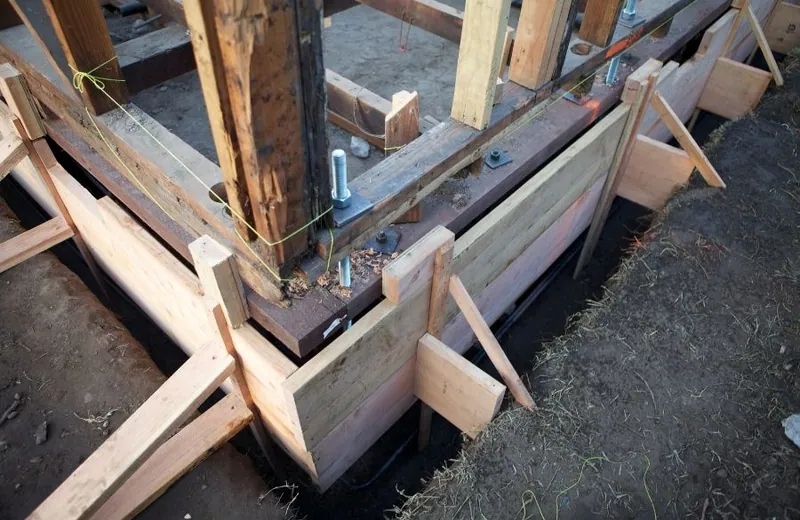
We repair raised foundations by replacing failed piers, re-shimming beams, sistering or replacing sagging sills, girders and joists, and fixing crawl space problems that lead to rot.

Poured or precast concrete pier replacement, steel shims, treated lumber for beam and sill repairs, and better crawl space ventilation and moisture control.

This is most of our work in Old Town Georgetown, Downtown Taylor, Granger and Florence. In historic overlay districts we keep exterior changes to a minimum and flag anything that may need a Certificate of Appropriateness.

Best for: Older homes with bouncy or wavy floors, rotted or tilted piers, damp crawl spaces or sagging centers.

Explore

Concrete Foundation Leveling & Concrete Slab Leveling

We bring uneven slabs, interior floors and flatwork back toward level, either as part of a pier job or on their own for settled sections.

Hydraulic lifting on new piers for structural leveling. Polyurethane foam or grout injection for voids and settled slab sections that don't need piers.

Common where slab leaks washed out soil, especially Uri-era freeze leaks, and where fill pads in hillside subdivisions have consolidated unevenly.

Best for: Sloping floors, voids under slabs and settled garage or patio sections.

Explore

Foundation Crack Repair, Concrete Wall & Floor Crack Repair, Foundation Patching

We seal and repair cracks in slabs, foundation walls, stem walls and interior concrete floors so moisture and pests stay out and the concrete holds together.

Epoxy injection for structural cracks, flexible polyurethane for cracks that may still move, and polymer-modified patching for spalled edges and exposed areas.

Cracks here often open in drought and close after rain. We measure them over time so you're not just patching over ongoing movement.

Best for: Stable cracks, spalled foundation edges and cracks left over after the structure has been stabilized.

Explore

Foundation Drainage

We move water away from your foundation so the clay around it stays at a steadier moisture level and repairs last.

French drains, regrading, downspout extensions and buried lines, surface drains, and advice on watering your foundation in drought.

These are key after Flash Flood Alley storms on hillside lots in Teravista and Berry Creek and on flat Blackland lots in Hutto. We submit to HOA architectural review in Sun City, Wolf Ranch and similar communities when it's required.

Best for: Ponding near the slab, eroded beds, short downspouts, and any home that's had pier work done.

Explore

Concrete Slab Leak Repair

When a plumbing leak under the slab is moving your foundation, we coordinate the leak testing and repair, then deal with the soil and slab damage it caused.

Licensed plumbers handle hydrostatic and pressure testing and the leak repair. We follow with void filling, slab leveling or pier work as the soil requires.

Most often needed in 1970s–80s homes in Brushy Creek, Wells Branch, Jollyville and Forest Creek with aging cast-iron drain lines.

Best for: Localized humps, damp floors, high water bills or recurring sewer problems combined with cracking.

Explore

Post-Tensioned, Poured Concrete & Concrete Block Foundation Repair

We repair poured concrete, post-tensioned and concrete block foundations, including stem walls and foundation walls that have cracked, bowed or settled.

Tendon-aware drilling following Post-Tensioning Institute practices, repair of exposed tendon ends, block wall repointing and reinforcement, and stem wall rebuilding.

Post-tensioned work fits Sun City Texas, Wolf Ranch and Teravista. Block and stem wall repairs are more common in older homes around Taylor, Granger and Round Rock's original town.

Best for: Newer builder homes past warranty, and older homes with cracked or bowing stem walls.

Explore

Concrete Foundation Reinforcement & Concrete Foundation Sealing

We strengthen weakened foundation sections and seal concrete against moisture so the foundation holds up longer.

Added beams or reinforcement where the design calls for it, carbon fiber or steel reinforcement for walls, and penetrating or membrane sealers for exposed concrete.

Useful after leak-related erosion and on exposed slab edges and stem walls that take the full Central Texas sun and repeated wet-dry cycles.

Best for: Foundations with weakened sections, exposed edges or long-term moisture exposure.

Explore

Garage, Driveway & Commercial Foundation Repair

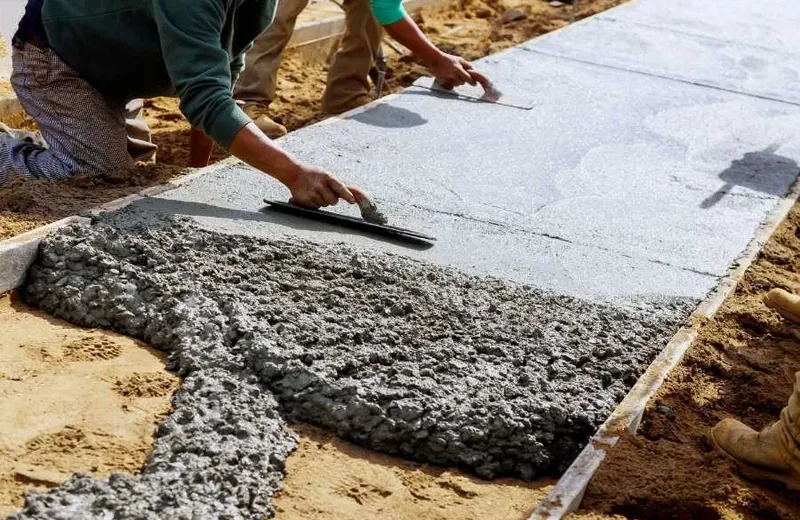
We repair garage slabs, driveways and the foundations of small commercial buildings that have settled, cracked or separated.

Slab leveling, crack repair, pier installation and drainage correction, scheduled around business hours or HOA access rules.

Garage slabs in newer subdivisions often crack where they meet the house. Small commercial buildings along the I-35 and SH-130 corridors see the same clay movement as homes.

Best for: Settled garage floors, heaved driveways and small commercial or mixed-use buildings.

Explore

Foundation Installation, Foundations & Crawl Space Foundation Construction

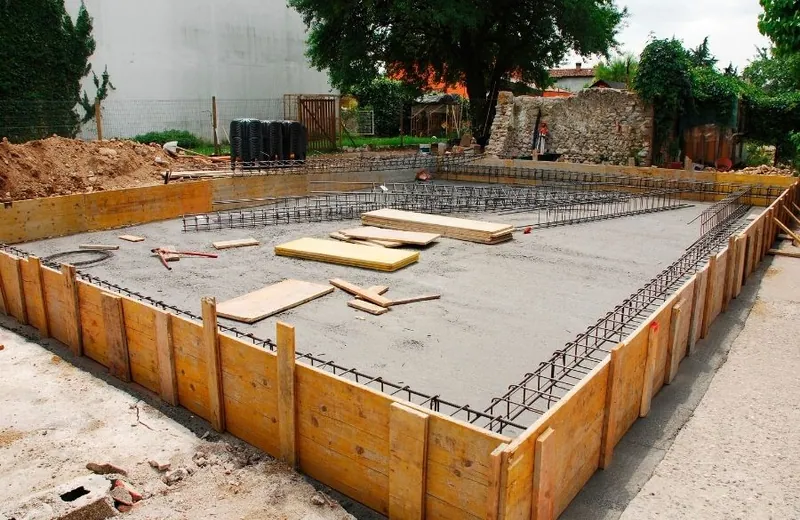
We build new foundations for additions, outbuildings and raised structures, and replace foundations that are beyond repair.

Slab, pier-and-beam and crawl space foundations built to engineered plans suited to the site's soil and rock conditions.

Designs differ a lot between west-side lots on limestone and east-side lots on deep expansive clay. We check permit jurisdiction with the city, the county or the MUD for each project.

Best for: Additions, accessory buildings, raised structures and foundation replacements.

Explore
Know The Signs

Common Foundation Problems We See Around Georgetown

Most of the foundation damage we find here comes from the same few causes: clay that swings with the weather, shallow rock under part of a house, leaks under the slab and water that drains toward the house instead of away. These are the problems we see most often, roughly ranked by how urgent they tend to be.

Perimeter Heave and Settlement on Expansive Clay Serious

When the soil under a slab gains or loses moisture unevenly, the edges rise or drop relative to the center. Clay at the perimeter dries out and shrinks in drought, then swells after heavy rain. That cycle bends the slab and cracks everything built on top of it.

Why it's common here

The Houston Black and Branyon clays east of I-35 rank among the most expansive soils in Texas. During the 2011 and 2022–2023 droughts, perimeter soil dried several feet deep. Then spring storms re-wetted it unevenly. Water restrictions cut yard watering just when slab edges needed moisture most. Big live oaks and cedar elms pull even more water out in summer. Repeat that for a few years and the perimeter beams either sink or ride up while the interior stays put.

Signs you'll notice
  • Stair-step cracks in brick or stone veneer
  • Doors that stick or won't latch
  • Gaps between window frames and brick
  • Floors sloping toward one side of the house
  • Diagonal drywall cracks at door and window corners
  • Cracked floor tile running across a room
Local patterns

We see this most in Weir, Hutto, Taylor and east Round Rock on Blackland clay. It also shows up in Wolf Ranch and Georgetown Village homes that are going through their first big drought-and-rain cycle. Corners near mature trees usually move first.

Our fix: Pressed pilings or drilled concrete piers set below the active clay zone, careful lifting, then drainage and moisture control so the problem doesn't come back.

Uneven Support Over Limestone, Chalk and Fill Serious

Part of the foundation rests on or near rock, and the rest sits on clay or fill dirt. The rock end stays put and the clay end moves. That pulls the house in two directions and concentrates cracking along a line across the structure.

Why it's common here

West of I-35, karst limestone can sit only a few feet down on one side of a lot and drop away on the other. Many hillside subdivisions were built on cut-and-fill pads, so the uphill half of a slab sits on cut rock and the downhill half sits on compacted fill. Between the two zones, shallow clay over chalk is common. Fill can consolidate, and clay keeps swelling and shrinking while the rock end stays still. Piers have to be planned around where rock actually is.

Signs you'll notice
  • One crack line running across the whole house
  • Cracks in the garage slab continuing into the house
  • Floors that dip toward the downhill side
  • Separation where the patio or porch meets the house
  • Interior doors out of square on only one end of the house
Local patterns

Common in Berry Creek, Serenada, Cimarron Hills, the Lake Georgetown area, Leander and Liberty Hill. On these lots, piers may hit refusal on shelf rock at shallow depth, so the equipment has to handle rock.

Our fix: Pier placement planned from soil and rock conditions, with drilled piers where pressed piling would stall early, plus leveling across the transition zone.

Slab Leaks and Failing Cast-Iron Drain Lines Emergency

Water or sewage leaking under the slab soaks the soil in one area. That clay swells and lifts the slab, or the soil washes out and leaves a void. In both cases one section of the house moves and the rest doesn't.

Why it's common here

The 1970s–80s homes in Round Rock, Brushy Creek, Wells Branch and Jollyville have cast-iron drains that are now 40–50 years old and corroding. Winter Storm Uri in February 2021 burst pipes all over the area, and some of those leaks went unnoticed under slabs. Leaks can also mask heaving, because the wet spot rises while the dry perimeter sinks, and that misleads anyone who only takes floor elevations. That's why we recommend a plumbing test alongside the foundation evaluation whenever the pattern points to a leak.

Signs you'll notice
  • Unexplained jump in the water bill
  • Warm or damp spots on the floor
  • Mildew smell or lifting flooring
  • Slow drains or recurring sewer backups
  • A hump or crack concentrated in one room
  • Sound of running water with fixtures off
Local patterns

Most common in 40–50-year-old slabs in Brushy Creek, Wells Branch, Forest Creek and Jollyville. We also find it in newer homes after freeze events. Kitchens, baths and laundry areas are the usual locations.

Our fix: Coordinated plumbing leak testing, repair of the leak by a licensed plumber, then slab leveling or void correction once the soil stabilizes.

Pier-and-Beam Sag in Historic Homes Moderate

Older raised homes sit on wood, stone or concrete piers that support beams and floor joists. Over a century, wood piers rot, masonry piers settle or tilt, shims crush, and sills and girders sag. You end up with bouncy, wavy floors.

Why it's common here

Old Town Georgetown and the streets around the Downtown Square are full of homes built before slabs were the norm. Many crawl spaces are poorly vented and stay damp after Flash Flood Alley storms, which speeds up wood rot. The clay under them still swells and shrinks, so individual piers move at different rates. Any visible exterior change in the historic overlay can also trigger design review, so repairs need to preserve original materials where possible.

Signs you'll notice
  • Soft, bouncy or sagging floors
  • Floors sloping toward the center of the house
  • Gaps under baseboards
  • Damp, musty crawl space
  • Cracked plaster at ceilings
  • Doors swinging open or closed on their own
Local patterns

Typical in Old Town Georgetown, near Southwestern University, in Downtown Taylor and in older homes in Granger, Florence and Round Rock's original town. Most are Victorian, Queen Anne and early-1900s cottages.

Our fix: Replace failed piers with concrete, sister or replace damaged sills and girders, re-shim to level, and improve crawl space ventilation while keeping historic finishes intact.

Drainage and Grading Failures Moderate

Water that collects against the foundation saturates the perimeter clay, so it swells, softens or washes out. Flat or reversed grading, short downspouts and clogged gutters are the usual culprits. Drainage problems often cause foundation damage in the first place.

Why it's common here

Storms here often drop several inches in a few hours after weeks of dry weather, and the bad grading shows up all at once. Hilly subdivisions send runoff from uphill lots into downhill yards. Homes near the San Gabriel River forks and Brushy Creek deal with high runoff. Builder grading on cut-and-fill pads often settles flat within a few years. Landscaping beds and flatwork added later frequently trap water against the slab.

Signs you'll notice
  • Standing water near the foundation after rain
  • Downspouts dumping right at the slab
  • Soil eroded away from the slab edge
  • Mulch beds sitting higher than the slab
  • Water stains on interior baseboards along one wall
Local patterns

Very common in hillside lots in Berry Creek, Teravista and Cimarron Hills and in Sun City homes with heavy landscaping. Flat Blackland lots in Hutto and Pflugerville often pond water too.

Our fix: Regrading, French drains, downspout extensions or underground lines, and surface drains, with HOA architectural approval handled where required.

Post-Tensioned Slab Cracking in Newer Homes Moderate

Post-tensioned slabs use steel cables under very high tension to hold the concrete in compression. They resist cracking well but can still deflect on moving clay. Drilling into a cable carelessly is dangerous and can weaken the slab.

Why it's common here

Most homes built here since the mid-1990s, including Sun City Texas, Wolf Ranch, Teravista and the newer subdivisions in Leander, Liberty Hill, Hutto and Jarrell, sit on post-tensioned slabs. Many 2000s–2010s homes are now outlasting their builder warranties just as the soil goes through its first serious drought-and-rain cycles. Veneer, tile and drywall show the movement quickly. Repairs have to follow Post-Tensioning Institute practices and stay clear of tendons.

Signs you'll notice
  • Hairline-to-wide cracks in stone or stucco veneer
  • Tile cracks in long straight lines
  • Garage door that no longer seals evenly
  • Cracks above interior doorways
  • Exposed cable ends or rust staining at the slab edge
Local patterns

We see this mostly in Sun City Texas, Wolf Ranch, Teravista and Georgetown Village, and in builder homes in Hutto and Leander that are 8–20 years old.

Our fix: Cable-aware pier placement and leveling, repair of any exposed or damaged tendon ends, and drainage improvements to limit future movement.

Minor Slab, Floor and Garage Cracks Minor

Thin shrinkage cracks in slabs, garage floors and driveways are common and often cosmetic. They still let moisture and soil gases in, and they can be early signs of bigger movement, so they're worth recording and watching.

Why it's common here

Concrete shrinks as it cures, and Central Texas heat speeds that up. Cracks often open during drought and close after rain, so many homeowners wait. A crack that's under about 1/8 inch and isn't moving is usually just a sealing job. A crack that widens, offsets or keeps coming back is a different story.

Signs you'll notice
  • Hairline cracks in garage or driveway concrete
  • Cracks under 1/8 inch with no offset
  • Cracks that open in summer and close in winter
  • Minor spalling at slab edges
Local patterns

Found in nearly every neighborhood, especially garage slabs and driveways in newer subdivisions. Expect them in Jarrell and Liberty Hill builder homes poured in summer heat.

Our fix: Measure and photograph the crack, seal or patch it with epoxy or polyurethane, and check it again after the next season to confirm it's stable.

Transparent Pricing

How Much Does Foundation Repair Cost in Georgetown, TX?

Most Georgetown-area foundation repairs land somewhere between a few thousand dollars and the low tens of thousands. Your total depends on soil, foundation type, how many piers are needed and what's causing the movement. Here's what drives the price, with realistic local ranges.

Typical Project

Historic pier-and-beam leveling in Old Town Georgetown

About 1,600 sq ft early-1900s home, re-shimming plus replacing 8–12 deteriorated piers and minor sill repair

$4,500 – $12,000
Typical Project

Corner settlement on a 1980s Brushy Creek slab

About 1,900 sq ft brick ranch, 8–10 pressed pilings at one corner, plus a plumbing test

$5,500 – $10,500
Typical Project

Perimeter heave and settlement on Blackland clay in Hutto

About 2,400 sq ft post-tensioned slab, 18–26 piers, French drain and downspout lines

$14,000 – $28,000
Typical Project

Drainage correction for a Sun City home

Regrading, about 80 ft of French drain, buried downspout lines, HOA approval included

$3,000 – $8,000
Number and Type of Piers Primary Factor

Piers usually make up most of the cost. Pressed concrete pilings typically run about $350–$700 each in this market. Steel piers and drilled concrete piers often run $800–$1,500 or more, depending on depth. A corner repair may need 6–10 piers, while a full perimeter on deep Blackland clay can need 25 or more. West-side lots with shallow rock sometimes need fewer piers but call for drilling.

Soil and Rock Conditions Primary Factor

Deep, highly expansive clay east of I-35 often means deeper piers and more of them. Karst limestone and shelf rock on the west side can stop pressed piers early or require rock-capable drilling. Lots with clay over chalk, or with cut-and-fill pads, often need a mix of methods across the same house, and that affects labor and equipment.

Foundation Type Secondary Factor

Pier-and-beam re-shimming and pier replacement are often less expensive than slab piering, but historic homes with rotted sills or girders can add carpentry costs. Post-tensioned slabs need careful cable-aware layout. Older conventionally reinforced slabs may need interior piers reached through flooring or a tunnel, which adds labor and restoration work.

Drainage, Plumbing and Root Issues Secondary Factor

Fixing the cause often adds to the scope. French drains and regrading typically run $2,500–$9,000. Under-slab plumbing tests commonly cost a few hundred dollars, and leak repairs vary widely. Root barriers near protected trees may need extra planning and care to meet Georgetown's tree ordinance.

Engineering, Permits and Approvals Additional Factor

An independent engineer's evaluation or repair design usually runs around $500–$1,000 or more. Permit fees vary by city, county or MUD. HOA review in communities like Sun City or Teravista and historic review in Old Town add paperwork and sometimes time, but rarely add much cost.

Financing is available, so you can take care of the foundation now instead of waiting while damage spreads. Ask about options when you get your written estimate. Homes in Williamson County are valuable, and unresolved foundation movement is one of the most common reasons sales stall. Fixing it early, with documentation, protects both your equity and your next closing.

Local Expertise

Why Georgetown Homes Need Foundation Repair More Than Most

Georgetown homes face three pressures at once. The soil changes sharply across the city, the weather swings between drought and downpour, and the housing ranges from 1890s pier-and-beam to post-tensioned slabs poured last year. Here's why foundations around here move, and why a one-size-fits-all fix doesn't hold up.

Soil and Climate: Where Limestone Meets Expansive Clay

I-35 roughly follows the Balcones Escarpment. On the west side, in Berry Creek, Serenada, Cimarron Hills, Leander and Liberty Hill, homes sit on thin clay and caliche over Edwards and Comanche Peak limestone. That rock is karst, full of fractures, voids and shelf rock. On the east side, in Weir, Hutto, Taylor and east Round Rock, Houston Black and Branyon clays run deep over Austin Chalk and Taylor Marl, and they can crack wide open in a drought. Rainfall averages in the mid-30s of inches a year but tends to arrive in bursts. Summers bring weeks of mid-to-upper 90s and many 100°F+ days. Every time the soil dries out and then gets soaked again, the slab perimeter heaves or settles, and the damage builds up over the years.

Three Eras of Housing, Three Kinds of Foundation

Old Town and the Downtown Square around Southwestern University have Victorian, Queen Anne and early-1900s homes on wood, stone or concrete piers. Rotted piers, sagging girders and poorly vented crawl spaces are common there. In the 1970s–80s neighborhoods of Round Rock, Brushy Creek, Wells Branch and Jollyville, brick ranches sit on conventionally reinforced slabs that are now 40–50 years old. Many have mature trees beside them and aging cast-iron drains underneath. Since the 1990s, Sun City Texas, Teravista, Wolf Ranch and Georgetown Village have been built on post-tensioned slabs, often over cut-and-fill pads. Those cables are under high tension, so anyone drilling near them has to know exactly where they run.

Permits, Engineers, HOAs and Historic Rules

Texas doesn't license foundation repair contractors, but engineers who design repairs must be licensed by the Texas Board of Professional Engineers and Land Surveyors. Georgetown and Round Rock generally treat structural foundation work as permitted work, often with engineer documentation. Unincorporated areas such as Serenada and parts of Brushy Creek fall under county and MUD rules instead. In Georgetown's Downtown and Old Town overlay districts, visible changes like new skirting or porch rebuilds may need a Certificate of Appropriateness. The city's tree ordinance protects Heritage Trees 26 inches and larger, which limits digging in root zones. Sun City, Teravista, Wolf Ranch and Berry Creek also review drainage and exterior work and set rules for contractor hours.

A Fast-Growing, Resale-Driven Market

Georgetown has been one of the fastest-growing cities in the country, and Williamson County keeps adding residents. Many newcomers arrive from California and the Midwest and have never dealt with expansive clay or watering a foundation. Homes turn over quickly, and TREC-licensed inspectors flag foundation movement often. When that happens, sellers need an engineer's report, permits and documentation fast enough to keep the closing on schedule. Retirees in Sun City want tidy job sites and clear paperwork. First-time buyers in Hutto and Leander mostly want to know the real cost before they commit.

Georgetown Foundation Repair Group Foundation Repair Company in Georgetown, TX project in Georgetown, TX (1)
Georgetown, TX
Georgetown Foundation Repair Group Foundation Repair Company in Georgetown, TX project in Georgetown, TX (2)
6+ Years
Talk to a Local Expert
The Georgetown Foundation Repair Group Difference

Why Homeowners Choose Georgetown Foundation Repair Group

We Know Both Sides of the Escarpment

A home in Serenada and a home in Weir can be ten minutes apart and need opposite approaches. West-side lots often hit limestone or shelf rock a few feet down, so we plan for rock-capable equipment or drilled piers. East-side Blackland Prairie clay can be active for many feet, so piers have to go deeper and moisture control matters as much as the lift. Many lots in between have clay over chalk, with one end of the house near rock. We plan every repair around the soil you actually have.

Clear Findings and Written Options Before Any Work

We don't hand you a single number and push for a signature. After every inspection we explain what's moving, why, and what happens if you wait. Then you get written repair options showing scope, pier locations, drainage work and pricing. Sometimes the right answer is a $3,000 drainage fix rather than a $15,000 pier job, and we'll say so. That's especially important for newcomers who've never dealt with expansive clay and want to understand the problem before spending money.

Bonded and Insured

Texas doesn't license foundation repair contractors at the state level, so the protections you get depend on who you hire. Georgetown Foundation Repair Group is bonded and insured. Your home, your neighbors' property and our crew are covered while we work. Repairs that call for engineering are coordinated with an independent engineer licensed by the Texas Board of Professional Engineers and Land Surveyors. That's the kind of documentation buyers, lenders and HOAs ask for.

Post-Tensioned and Historic Pier-and-Beam Experience

Much of Georgetown's housing falls into two groups that need specialized handling. Post-tensioned slabs in Sun City Texas, Wolf Ranch and Teravista have cables under enormous tension, and drilling blindly into one is dangerous. Historic homes near the Downtown Square sit on century-old piers and beams, where original materials matter and design review may apply. We work on both regularly, following Post-Tensioning Institute practices on cable slabs and preserving historic fabric on older homes wherever possible.

We Look at Plumbing and Drainage, Not Just Piers

Piers won't stop a slab from moving if a leaking cast-iron drain is soaking the clay underneath or every downspout empties against the foundation. In 1970s–80s homes across Brushy Creek, Wells Branch and Jollyville, we watch for leak-driven heave and recommend plumbing tests when the pattern points that way. In hillside neighborhoods we check grading and runoff. Fixing the cause is what keeps the repair from failing after the next drought or flash flood.

Respectful, Tidy Job Sites

Many of our clients are Sun City retirees and busy professional families, and they don't want a crew that leaves ruts in the lawn and mud on the porch. We protect landscaping and flooring, follow HOA rules on contractor hours and access, clean up every day, and tell you before we arrive. When the job's done, the only thing you should notice is that the doors close properly again.

Financing That Makes Repairs Manageable

Foundation problems rarely show up when it's convenient. You might be in the middle of a home sale, or the damage appears right after a big expense. We offer financing so you can fix the problem now instead of waiting while cracks spread and repair costs grow. We'll go over the options alongside your written estimate so you can compare them clearly.

Simple & Transparent

How Our Foundation Repair Process Works

It's a straightforward process with no surprises. You'll know what's wrong, what it costs and what the options are before anyone picks up a tool.

Inspection and Evaluation

Usually scheduled within a few days; on-site visit takes about 1–2 hours
  • Take floor elevation readings throughout the home
  • Measure and photograph cracks inside and out
  • Check grading, gutters, downspouts and trees near the foundation
  • Look for signs of plumbing leaks under the slab

Local note: We note whether your lot is likely shallow limestone, deep Blackland clay or a mix, because that changes the pier strategy.

Written Repair Options

Typically within a few business days
  • Walk you through the findings in plain English
  • Provide written options with scope, pier count and pricing
  • Recommend plumbing testing or an independent engineer when warranted
  • Discuss financing if it helps

Local note: For resale deadlines, we focus on documents that buyers, agents and lenders will ask for.

Engineering, Permits and Approvals

From a few days to a few weeks, depending on jurisdiction
  • Coordinate with a Texas-licensed engineer when needed
  • Pull permits with the city, county or MUD as required
  • Submit HOA architectural review packets
  • Check historic overlay and tree ordinance requirements

Local note: Georgetown and Round Rock usually require permits. Old Town may need a Certificate of Appropriateness, and Sun City has its own access rules.

Repair Work

Most slab pier jobs take 1–3 days; larger or pier-and-beam projects take longer
  • Protect landscaping, flooring and walkways
  • Install piers, lift and level in controlled stages
  • Locate and work around post-tensioned cables
  • Backfill, compact and clean the site daily

Local note: West-side rock may call for drilled piers. Around Heritage Trees, we route excavation to protect root zones.

Final Review and Follow-Up

At completion, with follow-up readings available after a season
  • Take final elevation readings and compare them to the starting survey
  • Walk through the completed work with you
  • Provide paperwork for your records or a future buyer
  • Share drainage and foundation-watering tips for drought
Trusted Locally

A Local Foundation Team You Can Trust

Serving Williamson County Since
2020
Georgetown, TX

Homeowners from Sun City to Old Town tell us they value a straight explanation of the problem, written options they can compare, and a crew that leaves the job site cleaner than they found it.

20 Miles
Service Radius Around Georgetown
17
Communities Served
100%
Of Jobs Start With Written Options
BondedInsuredFinancing Available
Where We Work

Foundation Repair Service Areas Around Georgetown

We're based in Georgetown and serve communities within about 20 miles. That covers Hill Country limestone to the west and Blackland Prairie clay to the east, with plenty of mixed-soil neighborhoods in between. Here's how the area breaks down.

Georgetown and North Williamson County

GeorgetownSerenadaWeirJarrellFlorence

West Side and Hill Country Edge

LeanderCedar ParkLiberty HillJonestownJollyville

Round Rock and South Corridor

Round RockBrushy CreekWells BranchPflugerville

East Side Blackland Prairie

HuttoTaylorGranger

We serve homes and small commercial properties within roughly a 20-mile radius of Georgetown. If you're near the edge of that range, call and we'll confirm. Not sure if we cover your area? Call (512) 746-1526.

Find Us

Serving Georgetown, TX & Nearby

3010 Williams Dr #247, Georgetown, TX, 78628 · Mon-Fri: 7:00 AM - 9:00 PM · Sat-Sun: 7:00 AM - 6:00 PM

GeorgetownSerenadaWeirJarrellFlorenceLeanderCedar ParkLiberty HillJonestownJollyvilleRound RockBrushy CreekWells BranchPflugerville
Questions & Answers

Foundation Repair FAQs for Georgetown Homeowners

How much does foundation repair cost in Georgetown?

Most residential repairs around Georgetown fall between about $4,000 and $25,000. Small corner repairs and pier-and-beam re-leveling are at the lower end. Full-perimeter piering on Blackland clay in Hutto, Weir or Taylor is at the higher end. Drainage-only fixes often run $3,000–$8,000. The biggest variables are how many piers you need, how deep they go, whether rock or deep clay is involved, and whether a plumbing leak or drainage problem also needs fixing. After the inspection you'll get written options with real numbers, and financing is available.

Is this a real foundation problem or just seasonal movement?

It's often both, and that's what makes it confusing. Clay around here shrinks in drought and swells after rain, so cracks open in August and close in March. A little seasonal movement is normal. Get it checked if cracks are wider than about 1/8 inch, have one side offset from the other, come back after patching, or show up together with sticking doors, gaps at window frames or sloping floors. An elevation survey is the clearest way to tell, especially if you're new to Texas and expansive clay.

How long does foundation repair take?

Most slab pier repairs take 1–3 days on site. Larger perimeter jobs, interior piers reached through flooring, or pier-and-beam work with carpentry can take a week or more. Getting started usually takes longer than the repair itself. Engineering, city permits and HOA or historic review can add a few days to a few weeks depending on jurisdiction. If you're under a resale deadline, tell us up front and we'll plan the paperwork around your closing.

Do I need a permit or an engineer for foundation repair in Georgetown?

Often, yes. Georgetown and Round Rock generally treat structural foundation work as permitted work, frequently with engineer documentation. Unincorporated areas like Serenada, parts of Brushy Creek and county land around Liberty Hill and Jarrell follow county and MUD rules instead. Engineers must be licensed by the Texas Board of Professional Engineers and Land Surveyors, and many buyers want an independent engineer's report. Old Town homes may need a Certificate of Appropriateness for visible changes, and HOAs like Sun City and Teravista have their own reviews. We check jurisdiction for every job.

Can you repair a post-tensioned slab safely?

Yes, as long as it's done carefully. Post-tensioned slabs, common in Sun City Texas, Wolf Ranch, Teravista and most newer subdivisions, contain steel cables under very high tension. They carry warning stamps against cutting for good reason. We plan pier locations and any drilling to avoid tendons and follow Post-Tensioning Institute practices. Many 2000s–2010s homes are past their builder warranty just as the soil starts its first big drought-and-rain cycles, so this is work we do often.

How can I prevent foundation problems on Central Texas clay?

The goal is to keep soil moisture steady around the slab all year. Extend downspouts at least 5 feet from the house, keep the grade sloping away, and don't let mulch beds sit higher than the slab. During drought, water the foundation perimeter evenly within your city's watering rules. A soaker hose 12–18 inches from the slab works well. Keep thirsty trees from crowding the house, and get unexplained high water bills checked for under-slab leaks. Most foundation damage here follows a long drought and then a heavy rain.

When should I call right away instead of waiting?

Call promptly if cracks are widening week to week, doors suddenly won't close, floors have developed a noticeable hump or dip, you see signs of a slab leak like warm floor spots or a jumping water bill, or a home inspector has flagged movement during a sale. Waiting through another drought-and-storm cycle usually makes the movement worse and the repair bigger. Plumbing leaks under a slab are especially urgent because they keep softening or washing out soil every day they run.

Will I get documentation I can give a buyer?

Yes. Every job comes with written findings and a written scope of work. When engineering is involved, we coordinate with an independent Texas-licensed engineer, and you'll have their report too. We take before-and-after elevation readings so a buyer's inspector can see what changed. Buyers in Williamson County often ask about transferable warranty coverage. We'll spell out exactly what coverage comes with your repair in writing before you sign, so there's no guesswork at resale.

Schedule Your Georgetown Foundation Inspection

Cracks and sticking doors rarely fix themselves, and the next drought or flash flood usually makes them worse. Find out what's really happening under your home and what your options are.

  • A thorough inspection with elevation readings and crack documentation
  • A plain-English explanation of what's causing the movement
  • Written repair options and pricing before any work begins
  • Repairs planned for your actual soil, from limestone to Blackland clay
  • A bonded and insured crew that keeps your property clean
  • Help with permits, engineers, HOA review and historic approvals
  • Financing available

We serve Georgetown, Serenada, Weir, Round Rock, Brushy Creek, Hutto, Leander, Cedar Park, Pflugerville, Taylor and nearby communities within about 20 miles.

Bonded • Insured

Call (512) 746-1526 Free Estimate